When Google's AI Contradicts Your Own Paid Ad on the Same Page
AI Overviews are now confidently contradicting paid search ads in real time, on the same SERP. Here is what that means for your budget and your message.
WebKing Intelligence Desk//Updated /Monitored live
Get my free auditFree, 30 minutes, no pitch deck. You keep the findings either way.
The search industry spent months bracing for a SERP layout problem: a fused AI panel where your sponsored ad, your organic citation, and your product card would all compete for the same pixels. That concern turned out to be a distraction. The real threat, documented by Search Engine Land in August 2026, is more direct. Google AI Overviews are confidently contradicting paid ads appearing immediately above them on the exact same page, in real time.
What Is Actually Happening on the SERP
When a user searches a commercial query, they may see your paid ad at the top of the page and an AI Overview panel below it. In the cases Search Engine Land identified, those two elements were not in agreement. The AI Overview stated something that directly conflicted with the claim in the paid ad sitting immediately above it. Both are on the screen at the same time. The buyer sees both.
This is not a formatting issue or a visibility issue. It is a trust issue. When your ad says one thing and Google's AI confidently says another, the user does not think Google is wrong. They think your ad is misleading.
Why This Hits Small and Mid-Size Advertisers Harder
Large brands have teams monitoring SERP appearance and messaging alignment. Small and mid-size business owners running paid search campaigns typically set campaigns and check performance dashboards, not screenshots of individual search results pages. A contradiction between your ad and an AI Overview can run for weeks on high-intent queries before anyone notices.
For industrial and commercial buyers who are already skeptical of advertising, a visible contradiction on the same page is a reason to close the tab and move on. The cost is not just a missed click. It is a missed sale from a buyer who was already close.
Same page
AI Overview contradictions appear immediately adjacent to the paid ad they conflict with, on the same live SERP
Where the Conflict Comes From
AI Overviews synthesize information from sources across the web, including your competitors, third-party review sites, and older content. If your ad promotes a current price, a product spec, or a service claim that differs from what the broader web says about your category, the AI may surface the contradiction without knowing it is your ad above it.
Your own outdated website content, old press mentions, or a competitor's claims can feed the AI panel that then contradicts your live paid campaign. You are paying per click to send buyers into a moment of doubt you helped create.
What This Means for Your Paid Search Strategy Right Now
The immediate priority is identifying which queries are triggering both your paid ads and AI Overviews, and then checking whether those Overviews align with or contradict your ad copy and landing page claims. This is a manual audit task that most campaign dashboards do not surface automatically.
Beyond auditing, the longer-term play is ensuring your owned content, website copy, product descriptions, and FAQ pages, gives the AI accurate and current information about your business. If Google's AI is going to summarize your category, you want your content to be the source it draws from, not a competitor's site or a three-year-old review.
Audit your top paid search queries for active AI Overview presence
Compare AI Overview language against your current ad copy claim by claim
Update on-site content that may be feeding outdated or conflicting signals to Google's AI
Flag landing page claims that differ from what third-party sources say about your product or service
How WebKing runs this
We would audit your highest-spend paid search campaigns and cross-reference the queries triggering AI Overviews against your current ad copy. Where we find contradictions, we align your messaging, adjust bid strategy, and flag landing page claims that may be feeding the conflict. The goal is to make sure every dollar you spend in paid search is not being quietly undercut by the AI panel sitting one scroll away.
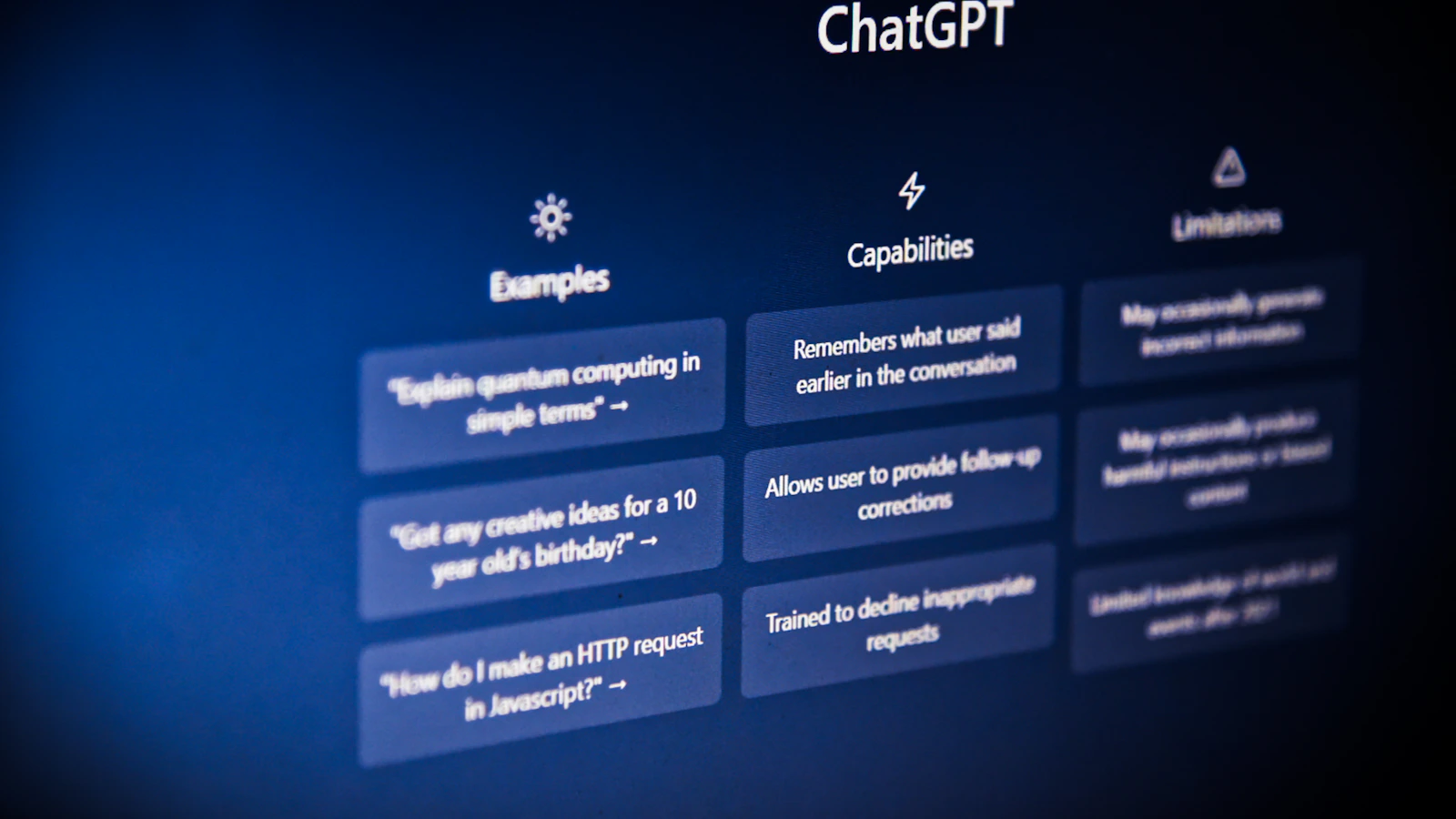
What is ChatGPT ads, and how is it different from Google Ads?
ChatGPT ads is OpenAI's ad platform that places your message in front of users who are already asking conversational, product-research questions in ChatGPT. Unlike Google Search, where intent is keyword-driven, ChatGPT targets the middle of the funnel, users actively exploring solutions before they commit to a purchase, not necessarily bottom-funnel transactional searches.
What does '20% of chat queries carry direct commercial intent' actually mean for my business?
It means that roughly 1 in 5 people using ChatGPT are asking questions with a buying intent behind them, like 'best CRM for small teams' or 'how to automate invoicing.' That's a high concentration of qualified prospects compared to display or awareness-focused channels, making it a middle-funnel opportunity.
Should I move budget from Google Search to ChatGPT ads?
Not necessarily. ChatGPT ads and Google Search serve different moments in the buyer journey. Google captures high-intent bottom-funnel queries; ChatGPT reaches evaluators earlier. The best approach is to test ChatGPT alongside your existing channels and measure which delivers lower customer acquisition cost for your products.
What types of businesses would benefit most from ChatGPT ads?
Businesses selling solutions to problem-solving questions are ideal, SaaS, professional services, e-commerce categories, and B2B tools. If your marketing success depends on reaching people mid-evaluation (before they click 'buy now'), ChatGPT's 'super intentional' user base is worth testing.
The Lab is original analysis by WebKing. We summarize and interpret developments from the sources above for industrial, commercial, and small business owners. Figures are reported as published by their sources.