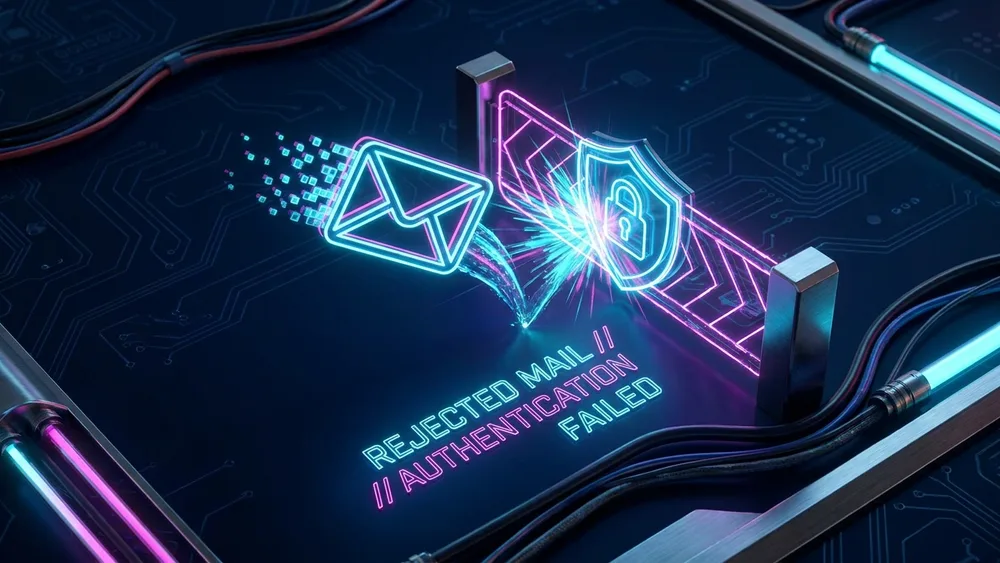
Gmail stopped warning you and started bouncing you, and your quotes are the casualty
Email authentication rules tightened into permanent rejections. A half-configured domain now means invoices and quotes silently fail to deliver.
WebKing Intelligence Desk//Monitored live
Get my free auditFree, 30 minutes, no pitch deck. You keep the findings either way.
Most businesses assume their email is fine because it "usually sends." In 2026 that assumption quietly started costing them deliverability on the messages that matter most.
What changed
Bulk senders now must have SPF, DKIM, and DMARC in place, and Google specifically requires alignment, so a domain with DMARC and SPF but no DKIM fails. Spam complaint rates must stay under 0.3%, one-click unsubscribe is required for marketing mail, and enforcement escalated from temporary delays to permanent rejections.
Why it matters for your business
This is not a marketing problem, it is a revenue problem. A one-time authentication audit protects the emails you cannot afford to have bounce: the quote, the invoice, the appointment confirmation.
How WebKing runs this
We run a full authentication audit and lock down SPF, DKIM, and DMARC the right way, so your revenue-critical email actually lands. This is the same discipline we apply on every domain we manage.
How do I know if my business email is actually failing to deliver?
You likely won't know unless a customer tells you. Gmail and other providers now bounce emails silently instead of warning you, so your quotes and invoices disappear without any error message on your end. If customers seem slow to respond to your pricing or payment requests, missing email authentication is often the culprit.
What exactly do I need to set up to make sure my emails get through?
You need SPF, DKIM, and DMARC all configured and aligned together on your domain. Google specifically requires DKIM alignment, meaning a domain with only SPF and DMARC will still fail. A professional can audit and set these up for you in one pass.
Is this just a spam or marketing issue I can ignore?
No, this is a revenue issue. Your critical business emails like quotes, invoices, and appointment confirmations are the ones at risk, not just newsletters. One failed quote can cost you a sale.
Do I really need to do this if my email usually works fine?
Yes. The rules shifted from temporary delays to permanent rejections in 2026, so 'usually works' no longer cuts it. A single authentication audit protects the emails you cannot afford to lose and takes only one effort to lock in.
The Lab is original analysis by WebKing. We summarize and interpret developments from the sources above for industrial, commercial, and small business owners. Figures are reported as published by their sources.