Shopify's AI Checkout Move Changes How Your Customers Pay
Shop Pay integration into AI agents is shifting checkout experiences, here's what it means for your conversion rate and customer data.
WebKing Intelligence Desk//Monitored live
Get my free auditFree, 30 minutes, no pitch deck. You keep the findings either way.
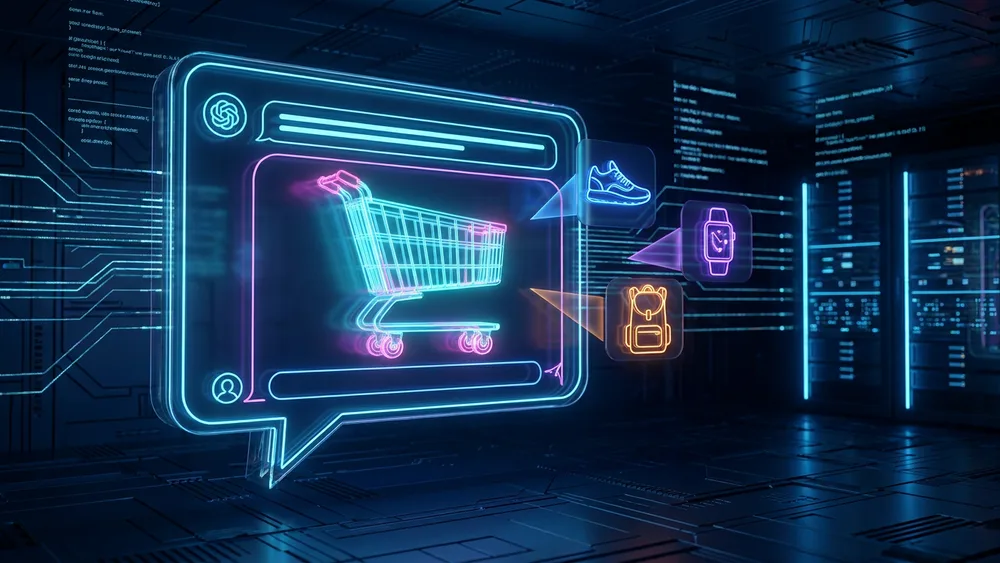
Shopify has moved Shop Pay deeper into the customer journey by integrating it into AI-agent checkout experiences. Instead of customers leaving an AI shopping assistant to pay elsewhere, they now complete transactions within the conversation itself. For ecommerce owners, this shift matters because it changes where and how conversions happen, and it changes the data you collect along the way.
The Checkout Integration and Conversion Impact
When payment lives inside the AI agent, friction drops. A customer can ask questions, see products, and pay without switching contexts. This is a direct attack on cart abandonment, the silent killer of ecommerce revenue. The move also means your checkout data now lives in a new place in your customer's journey, which changes how you measure success.
For owners tracking conversion rate, the timing matters. If your baseline conversion came from traditional checkout flows, AI-agent checkout may look like a separate funnel with its own metrics. You need to see both to understand your real win or loss.
Product Gallery Testing Without Design Overhaul
A recent test showed that product gallery changes, how images, descriptions, and variants are arranged and shown, drove conversion gains without requiring a full store redesign. This is important because it tells you that sometimes the highest-return move is not ripping out your entire front end. It is rethinking how customers see what you sell.
The takeaway for your store: your current layout may have untapped conversion potential. Before committing to a redesign, audit how customers navigate your product pages. Small presentation changes can move the needle.
Attribution Gaps: The Hidden Revenue Leak
Attribution gaps are the spaces between what you know customers did and what you know they bought. A customer might click an email link, scroll your social, visit from an ad, and then purchase days later. If you can't connect those dots, you don't know which touchpoint deserves credit, and you're guessing at budget allocation.
Ecommerce platforms collect customer data at many points: email opens, site visits, cart additions, and final purchases. But those systems don't always talk to each other. A customer who arrived via paid search, browsed for a week, then bought after an email may be credited entirely to email. Or split unevenly between channels. Or not tracked at all if they cleared cookies or switched devices.
With Shopify's AI-agent checkout now in the mix, the data picture gets more complex. You have traffic from traditional channels, traffic from AI assistants, and conversions happening in a new part of your funnel. Without proper attribution setup, you risk losing sight of which channel, touchpoint, or experience actually drove the sale.
What This Means for Your Next Move
Three immediate steps: first, audit where your current checkout conversions come from. Are they all traditional checkout, or do you have AI-assisted traffic? Second, test product gallery changes on a subset of inventory to see if presentation alone lifts conversion. Third, map your attribution flow end to end. Find the gaps. Know which channels you can actually trust.
Shopify's shift toward AI-powered checkout is not optional for your strategy. But you control how you measure it and how you respond. Starting with clear data is the only way forward.
How WebKing runs this
When a platform shifts how customers pay, we map the new flow against your current checkout metrics and customer journey to find where the lift lives and where gaps hide revenue.
What does Shopify putting Shop Pay into AI agents actually do to my checkout?
It lets AI-powered shopping assistants handle payment directly within their conversation, removing a step between product selection and purchase. This can reduce cart abandonment if customers stay in the agent flow instead of jumping to a separate checkout page.
Does the product-gallery test mean I need to redesign my store?
No. The test showed conversion gains without changing layouts or visuals, meaning the win came from how products were presented to customers, not from a full store rebuild. Your existing design may have room for similar gains.
Attribution gaps are the missing links between customer touchpoints and actual sales. If you can't connect which email, ad, or social post led to a purchase, you don't know where to spend your budget next, and you're flying blind on ROI.
How do I know if attribution gaps are costing me money?
If your analytics show traffic and engagement but you can't trace them back to specific revenue, or if your marketing spend doesn't match your sales data, you have gaps. Those blind spots mean wasted budget on channels that may or may not be working.
The Lab is original analysis by WebKing. We summarize and interpret developments from the sources above for industrial, commercial, and small business owners. Figures are reported as published by their sources.